
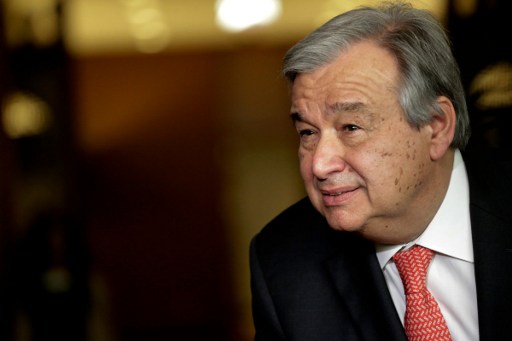
Portugal’s former prime minister Antonio
Guterres was poised to become the next secretary-general of the United
Nations following a decisive straw poll by the Security Council on
Wednesday.
Guterres, who served as prime minister
from 1995 to 2002 and was the UN’s refugee chief for 10 years, won
backing from 12 of the 15 council members — most importantly from four
of the five veto-holding powers.
Russian Ambassador Vitaly Churkin
emerged from the council chamber along with the 14 other ambassadors to
declare that Guterres was the “clear favorite” to succeed Ban Ki-moon as
the world’s diplomat-in-chief.
Churkin announced that a formal vote by
the council will take place on Thursday to confirm the choice of
Guterres, adding that he expected the selection to be “by acclamation.”
A fifth veto power, who was not
identified, expressed “no opinion” during the secret ballot, clearing
the way for the 67-year-old Socialist politician to become the new UN
chief.
“We wish Mister Guterres well in
discharging his duties as the secretary general of the United Nations in
the next five years,” Churkin said.
During Wednesday’s straw poll,
veto-holders Britain, China, France, Russia and the United States used
color-coded ballots to indicate for the first time whether they intended
to block a candidate. The 67-year-old Guterres, who served as
prime minister from 1995 to 2002, had held the number-one spot in the
previous five informal votes by the Security Council.
Once he is formally endorsed by the
Security Council, he will be presented to the General Assembly for it to
approve his candidacy.
Guterres, who will be the first former
head of government to lead the world body, has pledged to revamp the
United Nations to bolster its peacemaking efforts and promote human
rights. French Ambassador Francois Delattre said
the choice of Guterres was “good news for the United Nations” while
British envoy Matthew Rycroft said he will make a “very strong,
effective secretary-general”.
US Ambassador Samantha Power cited
Guterres’ experience and vision as “compelling” and stressed the need to
have an effective leader at the UN helm during a time of multiple
global crises.
“We are united in understanding the gravity of the threats that are out there,” said Power.
– Georgieva’s bid falters –
There were 10 candidates in the race to
become the next UN chief including EU budget commissioner Kristalina
Georgieva from Bulgaria who entered the fray just last week. Georgieva, however, failed to garner
crucial support from two of the permanent members, with speculation
turning to Russia’s opposition to her candidacy.
The former World Bank vice president
received eight negative votes including two from veto-holding members,
five positive votes including two from the permanent council members and
two “no opinion.” One of those was from a veto-holder.
Georgieva tweeted congratulations to Guterres and offered “best of luck in pursuing an ambitious agenda for the UN.”
UNESCO chief Irina Bokova, who was
pushed aside by the Bulgarian government to make way for Georgieva, also
received two negative votes from veto-holders.
Argentina’s Foreign Minister Susana
Malcorra received one negative vote from a veto-holder, while Slovak
Foreign Minister Miroslav Lajcak received two, according to diplomats.
New Zealand’s former prime minister and
head of the UN Development Programme Helen Clark received three negative
votes from the veto powers as did Serbia’s ex-foreign minister Vuk
Jeremic, Macedonia’s ex-foreign minister Srgjan Kerim and Natalia
Gherman of Moldova.
Slovenia’s former president Danilo Turk received four negative votes from the permanent five members.
The new secretary-general will begin work on January 1.
AFP
0 comments:
Post a Comment